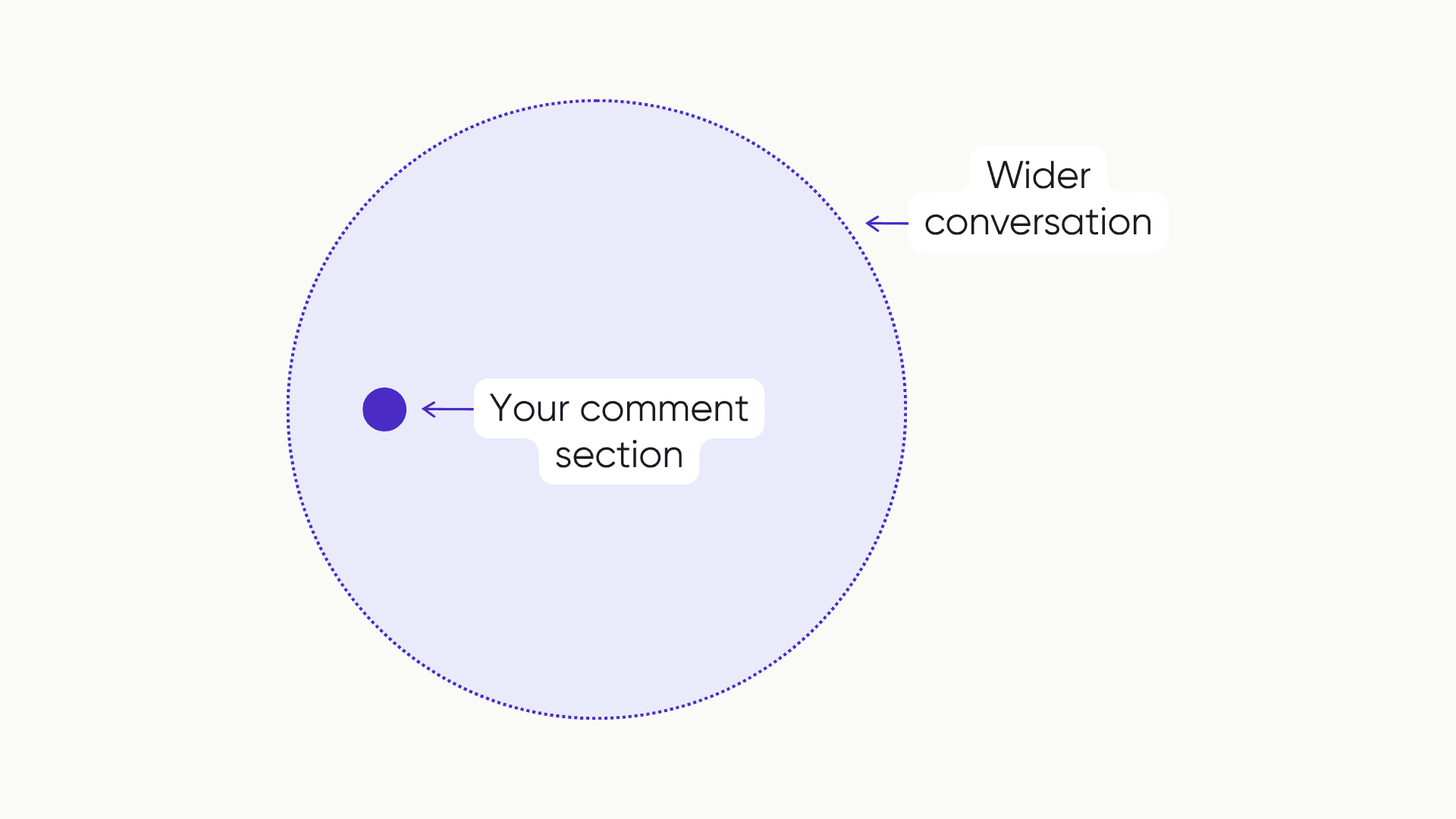



Most competitive social reports stop at the numbers everyone can see: follower growth, posting frequency, engagement rate. Those are useful for tracking pace, but they tell you almost nothing about what a competitor's audience actually thinks, wants, or is frustrated by - which is what’s actually going to help your strategy.
The best part is that it’s already sitting in plain sight, under every post they publish. Here’s how to analyze your competitors’ comment section, and what it can teach you.
Why does it matter what people say in your competitor's comments?
Every public post a competitor publishes comes with an open comment section, and most of the people writing in it are already the audience you're trying to reach. They're telling you, unprompted, what worked, what didn't, and what they wish existed instead. And they’re doing so for free, in public, in real time. So why not listen?

"Dashboards measure attention. Comment sections reveal intention — what people cared about enough to share out loud."

Social Insights Lead at Live Nation
According to Brand24's 2026 research, competitive intelligence is already the third most-cited reason marketers turn to social listening, behind sentiment tracking and trend detection. The intent is there. Most teams just aren't pointing it at the right feed.
What competitor comments actually reveal
A competitor's comment section holds three kinds of information you won't find in a benchmarking report: how their audience is reacting to specific decisions, what that audience is asking for and not getting, and which parts of their positioning are actually sticking versus just performing well for one post. Here's what to look for in each.
Product and pricing feedback before it becomes your problem
Say a competitor raises prices or adds a paid add-on to something that used to be free. The engagement numbers on that announcement might look completely normal. The comments are where you'd actually see whether people are annoyed about it, comparing the new price to alternatives, or threatening to switch - the kind of reaction that never shows up in a views count but tells you exactly how a similar move might land for you.

Gaps a competitor hasn't filled
Audiences use comment sections to ask for things a brand isn't offering, and they tend to repeat themselves. A discontinued product people still want back, a size or flavor that never got added, or a market the brand hasn't launched in yet. If the same request keeps showing up across a competitor's posts, that's a gap in their offering you can see clearly from the outside, well before it shows up in any of their own reporting.
How durable their positioning actually is
One well-received post doesn't tell you much about how a brand is actually perceived. Looking at a competitor's comments across several posts over a few months tells you something more useful: whether the same praise, jokes, or complaints keep resurfacing, which is a much better sign of what's actually sticking with their audience than any single spike in engagement.
"A competitive report can tell you a launch happened, but it can't tell you whether anyone actually cared. Reading the comments is how you find out."

Co-Founder of Siftsy
How to actually do it
Reading a competitor's comments manually, post by post, doesn't scale past a handful of posts a month. Here's a process that does.
Step 1: Pick the posts worth reading
Don't try to read everything a competitor publishes. Start with launches, campaigns, or anything that drove an unusual spike in engagement, as that's where the comments will have the most signal.
Step 2: Paste the link into Siftsy
Siftsy analyzes any public post's comment section, including ones you don't own. You don't need to be the account owner or have any special access. If the post is public, so are its comments.
Step 3: Read the sentiment and theme breakdown
Instead of scrolling hundreds of replies yourself, Siftsy surfaces the sentiment split, the recurring themes, and the specific comments driving each one. This is where a spike in negative sentiment around a specific word or phrase becomes visible in minutes, not hours.
Step 4: Pull evidence for the question you're actually trying to answer
Whether that's "is our pricing more competitive," "did their rebrand land," or "what are people asking for that we already offer". The goal is to walk away with specific quotes and patterns you can put in front of a stakeholder.
Common questions
Do I need my competitor's permission to analyze their comments?
How often should I be doing competitor comment analysis?
What should I actually do with what I find?
Building this into how you actually work
Most social teams already have a monthly ritual for checking competitor follower counts and posting frequency. Add ten minutes to that ritual for reading their comments on the posts that got unusual traction. Over a few months, that builds a real picture of what's landing with an audience that overlaps with yours.
Waiting for a specific campaign to force the question means finding out after the fact, once a rival has already launched something and your team is scrambling to react. Meanwhile the comments were sitting there the whole time, available to read at any point.